🇫🇷 🇬🇧 FP6: oxydation généralisée et refus de garantie/warranty denied du to oxidation

J’ai choisi Fairphone pour sa philosophie : un téléphone durable, réparable, dont on peut remplacer soi-même les composants.

Aujourd’hui, je suis particulièrement déçu par mon expérience.

Mon Fairphone 6 présente une panne totale du tactile. Après avoir personnellement testé un écran neuf, effectué des vérifications avec les outils de débogage Android et mis à jour le système, j’ai envoyé mon appareil au SAV.

Résultat : un devis de 262,06 €, comprenant le remplacement de la carte mère, avec un refus de prise en charge sous garantie pour « oxydation généralisée ».

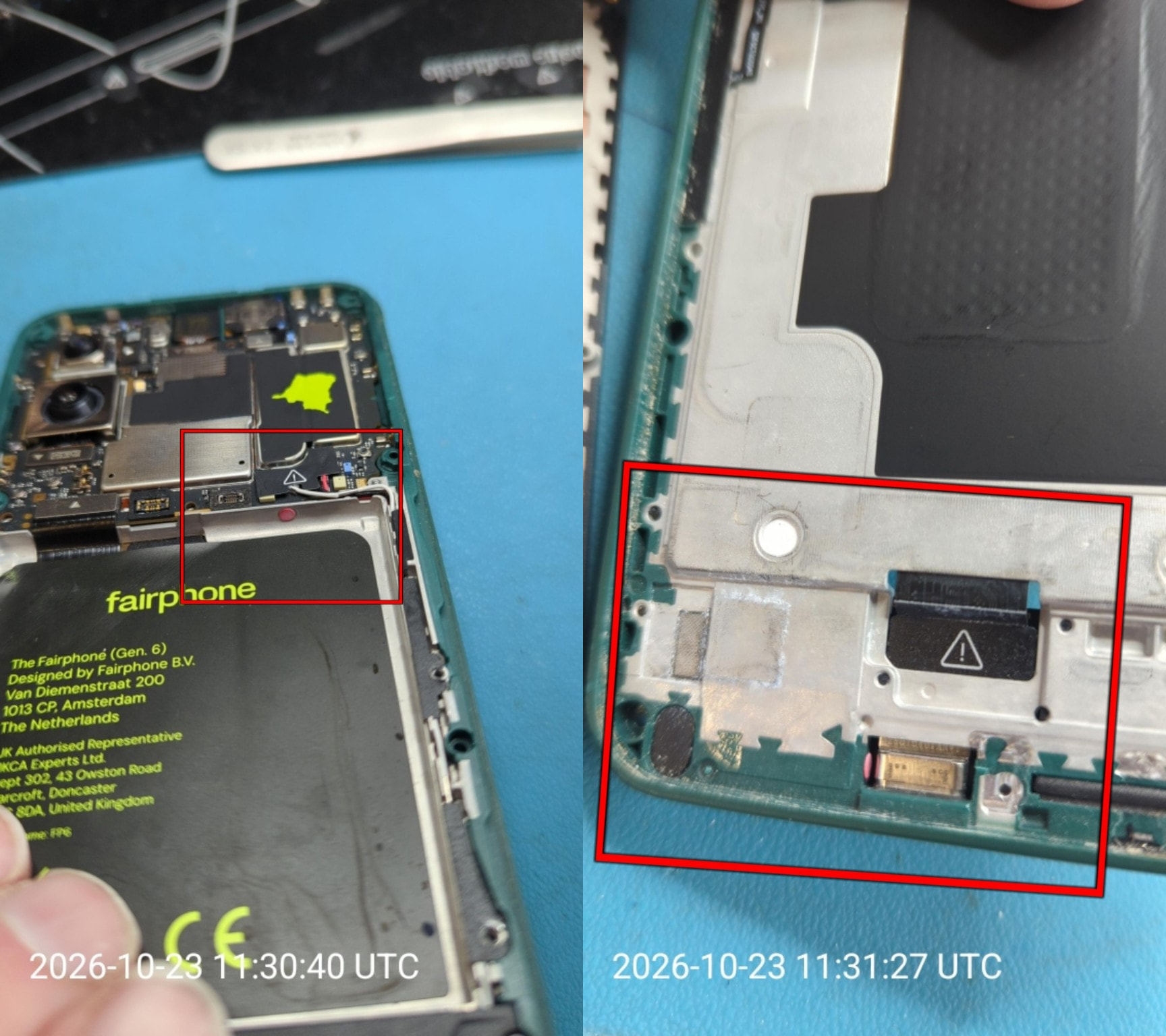
Pourtant, les photographies fournies par le réparateur ne montrent pas clairement de corrosion de la carte mère.

Après contestation, le SAV m’explique que l’expression « oxydation généralisée » est une catégorie prédéfinie, utilisée dès que plusieurs éléments présentent des traces d’oxydation, même si tous les composants ne sont pas affectés.

Je trouve cette qualification particulièrement discutable.

Le téléphone n’a jamais été immergé ni exposé à un liquide, et aucune explication technique précise ne m’a été communiquée établissant que les traces d’oxydation sont responsables de la panne tactile.

Le seul test fonctionnel explicitement décrit dans le rapport est un essai avec un autre écran, que j’avais déjà réalisé.

Autre déception : alors que j’ai choisi Fairphone pour sa réparabilité, je ne peux pas simplement acheter une carte mère de remplacement et effectuer moi-même cette réparation.

Enfin, malgré ma contestation, j’ai reçu un message automatique m’indiquant que mon appareil serait stocké en attente de destruction si je ne répondais pas au devis dans le délai imparti.

Je partage les photographies fournies par le SAV afin d’obtenir des avis techniques indépendants.

Mes questions à la communauté :

- Ces photographies permettent-elles réellement de conclure à une oxydation importante ?

- Est-il normal qu’un refus de garantie repose sur de telles constatations sans explication technique plus précise ?

J’aimerais également que Fairphone puisse examiner directement ce dossier.

Je reste attaché à la philosophie de la marque, mais cette expérience me fait sérieusement douter de la réparabilité promise et de la qualité du traitement des réclamations.

(J ai combiné les 2 photos fournies sans perte de qualité car je peux en poster qu’une)
Il me semble avoir vu passer un post ou deux par le passé sur ce thème du SAV et des oxydation. Un SAV plutôt obtus de mémoire. Mais c´est tout en anglais. Le gros du forum (FP6 en tout cas) ne tourne correctement qu´en faisant les posts en anglais, j´ai fait mes premiers posts en francais, rien, puis en anglais, soudainement un niveau d´interaction qui permettait de trouver des bonnes réponses. Je suis aussi venue sur ce forum en total désespoir de cause, et ca valait l´effort de la bascule en anglais. My 2 cents.

Ok merci pour votre retour je vais refaire un post en anglais cette fois en espérant que ca fasse réagir !

Hi everyone,

My Fairphone 6 touchscreen stopped working. After testing a replacement screen and ruling out software issues, I sent it in for repair.

The result: warranty denied due to “generalized oxidation” and a €262.06 repair quote to replace the motherboard.

The phone has never been exposed to water or other liquids.

I requested photographic evidence, but the pictures provided are not clear enough to identify any actual corrosion.

Fairphone’s repair partner explained that “generalized oxidation” is an internal diagnostic category used when traces are found on several components, even if the entire device is not affected.

Does anyone see clear evidence of corrosion in these photos? And would such corrosion justify replacing the motherboard for a touchscreen failure?

I’d appreciate your technical opinions and any similar experiences with Fairphone’s repair service.

This is no solace, but what Fairphone’s repair partner is referring to is most likely the liquid contact indicators (the exact term varies) – white spots that turn red (or pink as in the photos of your device) when liquid or enough humidity reaches them.

Hello and welcome to the community forum

Thank you for translating your post - it does make it easier for me to respond.

Have I understood correctly that you tested the replacement screen and it was not working either?

The other parts of the story are following the pattern.
Oxidation voids the warranty. Recently when communicated with the support, I learnt that (sometimes?) they suggest sending pictures prior to sending the phone for repair - and the pictures clearly are to display the water indicators. I think it is a great thing to have it checked before sending the phone.

It is closely related to the information on IP rating

Our phones contain several liquid contact indicators (LCI) inside the frame. Before performing any warranty repair, our team checks these indicators alongside signs of clear oxidation to verify if liquid reached the inside of your phone. Exposure to liquid, moisture, or dampness voids your warranty

So what happened is a standard procedure, meaning the repair team cannot ignore the fact that one of your indicators is now red.

Obviously the phone had been sent already which sets the decision matrix - you can pay a small amount and get it sent back untouched, or pay the whole amount and have it repaired. If the replacement screen failed, I would indeed expect either the connectors issue or the failure of the motherboard and yes - as you pointed out, you cannot replace the motherboard on your own.

You can of course try challenging the support decision - trying perhaps the live chat option. I do not know why and how the phone that was never exposed to water damage got the indicator(s) red. But I would not expect great results here.

Perhaps your story would help other users though.

I merged your topics

Exposure to liquid, moisture, or dampness voids your warranty. Check our full conditions on the Fairphone legal page.

This is indeed written in the conditions. However, I am not sure it would survive legal challenge. As far as I know, the manufacturer can only deny warranty if they can prove the damage has been caused by the user. The indicators can be used as evidence, but they still have to prove the damage is due to the oxidation.

As we are in the LLM era, you can ask a LLM on how to proceed in order to challenge the denial without incurring costs, specific to your jurisdiction. (e.g. maybe you don’t bring it to court, but you can still report or threaten to report the misconduct to local authorities (Fairphone is a jewel that I think it’s worth protecting, but not at any cost).