tl;dr: Hi, it seems to me we’re getting distracted by our differing world-views and life-experiences. Reality is messy, and attempts to simplify things to just a few numbers don’t always work. There is no strong evidence Fairphone isn’t honest. The extra details I give in this post prove it I think.
I’d like to add a few details and close my participation in this discussion, where I my curiosity was more than answered.
I had an edit to my last message which got lost: Yes, this foundation is indeed not that transparent and accessible. When you see which companies they’re funded by, their independance can be questionned.
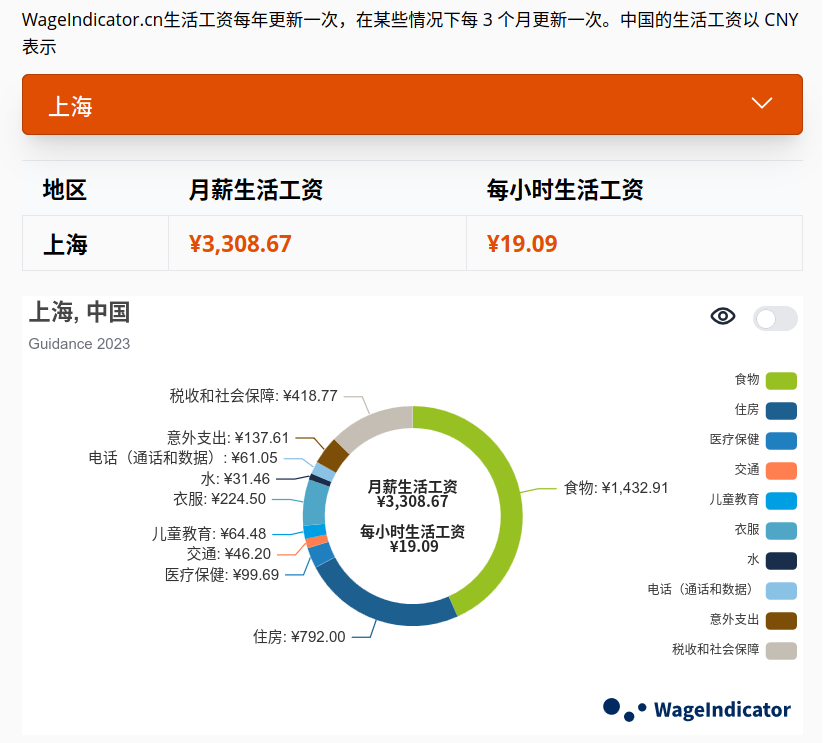
So even if it’s a bit tedious for China as the site is in chinese, you can get data from them. It gives for Shangai:
However in their article, fairphone cites another organisation, and they seem much more serious, and at least their base data seems accessible: China Archives - Global Living Wage Coalition.
Here the Shangai wage seems much higher, but this could be due to other complicated reasons.
So even if there are still a few questions, to me living wage is defined properly and we have usable numbers.
I had already spent too much time and took a shortcut making too many assumption here.
Thanks @Ingo for bringing in a bit more nuance. Indeed, now you mention it, it does seem like a speculative case in the living wage guide.
Even if there were only ~90 full time people simultaneously assembling the fairphone devices, that’s just the assembly line, not the whole supply chain. I believe you can reach much higher numbers when counting all the compounded positive impact. So I don’t think it’s just ~90.
However, this part of the article:
Since 2019, Fairphone has supported over 6,200 people working in five factories of suppliers and sub-suppliers with US$950.000 in living wage bonuses. On average, that means a month of extra salary per year for every worker we impacted.
stirs the reader into believing 6200 workers earned a month of extra salary/year with $950000. Which can’t be the case, as this amount of money means the total average benefit was only $150/worker all years added up (instead of each month, if we take their $15 → $21/day number). So there is progress to be made in communication.
(I do believe the 6200 number is representative though, and trust that we are just seing the result of approximations and phrasing ‒i.e. communication‒ mistakes)
Keep in mind it’s just a blog article, not a more serious report like their impact report as @Ingo said.
On a side note, I as well believe in “better than nothing” philosophy: as a result of their ethical work, fairphones are 2-3 times more expensive than similar competing phones, and in 2023 they had difficulties and were far from reaching their sales objectives:
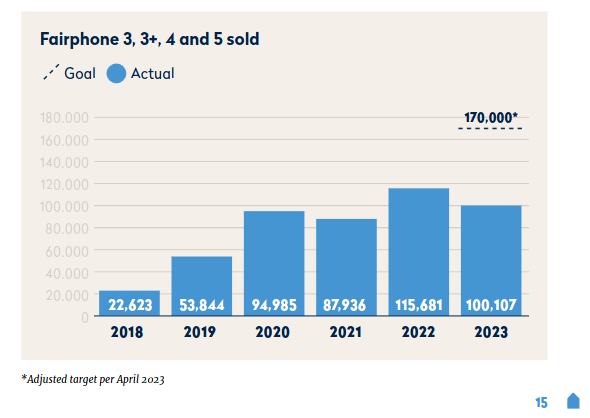
Keep in mind they do have to survive, and that most people don’t at all go in depth understanding all the details, they just look at the “frontpage numbers”. I’m ready to tolerate some communication approximations if it can allow them to keep going.
Let me add that I don’t have any money in fairphone, and will move elsewhere if they disappear. But we’d lose a positive player in the electronics market in my opinion, and this is why I think they at least deserve a fair (haha) judgement.
Finally, I believe this is false.
In my opinion, you just could have done better at balancing your judgement in this discussion @rodler
This is why I’m now leaving it, I just don’t have the time anymore. Thanks for raising the topic though.