Yep, would get me one when I need one. I’m currently using a Samsung Tab S5e (official Lineage 22.2) and S9 (self compiled unofficial Lineage 22.1) as main devices. My phone is for calling, texting and navigation, nothing more (yes, Lineage required for the next, alas this one has stock Samsung junk).
A LineageOS supported tablet is very rare, so yeah, I’d get one.
To be honest, bluetooth headphones are OK for just listening to something. I mean, I’m using my tablet mainly as device for consuming videos when travelling, due to the bigger screen compared to a mobile phone. With bluetooth headset, even with low latency codec you still have a minumum deviation of about 80ms between audio and video. That’s a pain in the a.. for me.
Maybe that’s OK for consumers of low level content from social media, but not if you’re watching people talking and the lips don’t match with the voice you hear.
Tablets are great for consuming video content and drawing/noting.
Thanks to the logic you just described, we have bigger and bigger phones, which at this point are basically phablets (including the FP6, which is extremely annoying).
The tablet is a middle ground between a phone (when the phone is a reasonable 4-5inch max!), and a laptop which is supposed to be the work machine.
Basically phone is for talking, tablet for light entertainment and hobbies, and the laptop for work. Then you can add a tower for heavy work / gaming (or a console for the latter).
Separation between those devices is important because you’re supposed to separate work/school and your general life. Nowadays people tend to forget that and want to cram their entire life and work into one device. To me that’s crazy.
Why would it be off topic to suggest what features we want in a future product?
If we aren’t allowed to even make the suggestion at that point, when can we?
I used to think that tablets were a solution to a non-existent problem - filling an artificially made niche between a laptop and a smartphone that I never felt that I missed being filled. everything changed when I started a new job that required lots of reading, and my Kindle Paperwhite wasn’t properly equipped for the kind of textbooks that were necessary. it turns out it’s pretty great to be able to carry a minilibrary to work, always ready to be consulted and referred to. my Galaxy Tab S7 is holding up fairly well so far other than some bright spots on the display here and there, but once it inevitably dies, I’d definitely consider a Fairtab as one of the possible options, if it existed.
Since my PC died, I use a tablet instead at home, phone has a way too small screen for confortable use in my couch, phone are good for outdoor.
I bought a Lenovo one, as I thought this huge company was serious about support (we have only Lenovo desktop PC at work).
But no, I bought it with Android 10 and it’s still android 10.
I would definitely replace it with a Fairphone one, and I’m considering changing it right now as it is starting to show lacks (battery drop for instance).
Well, I’ll go for another brand as I doubt Fairphone will make one in between.
That’s this tablet I use right now writing this post.
Same here. I have proper usecases for the S5e Tablet. Of course I also got rid of the bloatware overloaded Samsung rom right on the first touch.
The six year old tablet does a lot of quick simple tasks on daily bases where it just takes too much time to boot my Framework laptop or where it just takes too much space. Displaying recipes for cooking for example.
Also the freedom of having two systems, a mobile device for going outside and a second device for using at home with different apps wich doesent distract me when I am not at home and bigger screen size is a nobrainer for me.
So yes, I would probably get a Fairtab, when the Samsung dies one day or LineageOS is no longer maintaned.
I have a Framework 13 and a Supernote, so absolutely no need for a tablet in the foreseeable future. On the other hand, the current crop of tablets being mostly repair nightmares certainly did play its part in turning me away from the category. If there were some kind of FairTab option instead, I’d probably buy it for someone.
I don’t use a smartphone myself, but a classic feature phone.
I would like to submit a product suggestion that, in my view, aligns perfectly with your mission: the development of a Fairphone Tablet.
I currently use a Samsung Galaxy Tab Active (Enterprise Edition) because I am not aware of any sustainable alternative. What I value about this device is the replaceable battery, the long-term software support, and the integrated stylus, which is always available thanks to the case design. However, I would gladly switch to a Fairphone tablet if such a device existed.
For my daily use, a few features are essential:
5G connectivity – this is my primary internet access. Here in Austria, 5G is extremely fast and reliable, and I use it as a portable connection for all my online activity. The tablet effectively serves as both my e-book reader and my internet router, since I use its hotspot function to connect other devices.
Stylus support – using a pen is both socially accepted and practical. People perceive stylus use as more natural and focused than handling a tablet like a smartphone. At a desk, it’s convenient and efficient. I personally use handwriting only for signatures, but for text input I rely entirely on typing in the floating mode of the Samsung keyboard, which is extremely fast and comfortable.
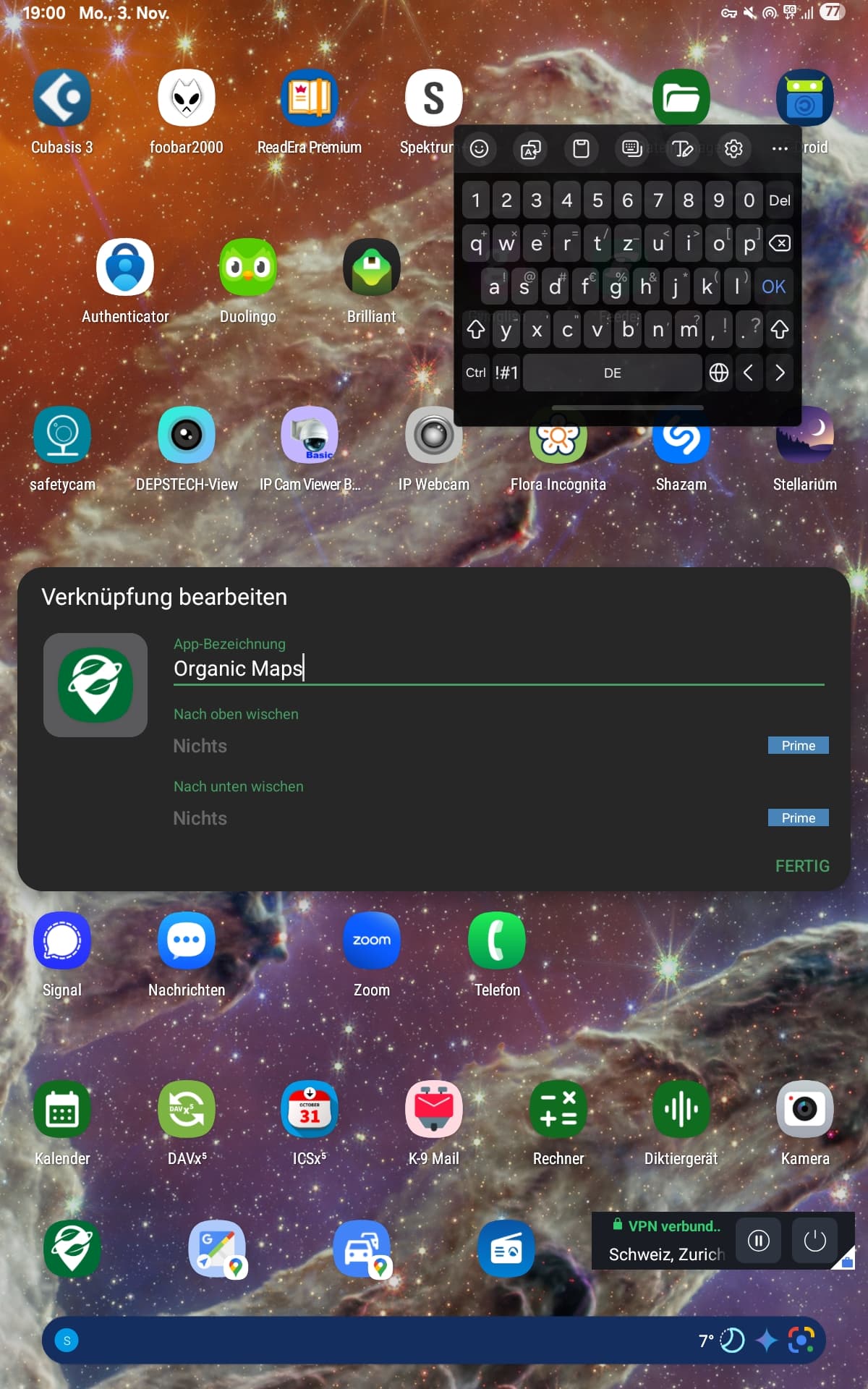
Keyboard versatility – please take inspiration from the Samsung keyboard. It allows quick switching between floating, split, and standard modes.
At a desk, I use the floating keyboard together with the pen – it’s practical and discreet.
While standing, I prefer the split keyboard (with G and H centered). The Samsung keyboard supports this only in English; Google’s Gboard allows it in German but cannot float.
In the car, I use the standard keyboard.
The key requirement is to switch between these modes instantly.
Full keyboard option – something similar to the Hacker’s Keyboard, including arrow keys, tab, and control keys, would be extremely useful.
Ideally, the keyboard should allow precise cursor control, either via arrow keys or through a touch-pad-like floating mode.
A tablet with these characteristics – sustainable, repairable, with 5G, long support cycles, stylus functionality, and a flexible input system – would fill a real gap in the market. It would appeal to users like me who avoid smartphones but still rely on a capable, open, and responsible Android device for reading, connectivity, and work.
For productive work, I prefer a full keyboard and mouse; a touchscreen tends to interfere rather than help.
Paper and pen remain unmatched for precise writing and drawing.
When the tablet lies flat on a table, however, a stylus becomes convenient — and is sufficient for sketches or notes in OneNote (Android version).
The stylus primarily serves as a mouse substitute, not as a handwriting tool, though it is useful for signing PDFs or making quick sketches.
2. Advantages of Android Tablets
Android tablets currently offer the best combination of:
Battery life: long-lasting and reliable.
Energy efficiency: ideal for continuous operation and hotspot use.
Functional versatility: hotspot router, voice recorder, camera, reading device, and notepad in one.
Although Android as a system often frustrates me, it remains functionally unmatched when one needs a universal, power-efficient, always-ready device.
3. Distinction from Smartphones
Smartphones have displays that are simply too small.
Their primary usage pattern promotes distraction and passive consumption; that’s why I use a classic keypad phone instead.
Everything a smartphone can usefully do, my tablet does better—with a larger battery, better ergonomics, and without constant distraction.
4. Alternative Systems and Their Limitations
Juno-Tab: interesting due to its power-efficient Intel platform. The upcoming version with mobile connectivity and GNSS could potentially replace an Android tablet.
ARM architecture: still tied to Android for maximum energy efficiency.
Apple devices: excluded because of non-replaceable batteries; continuous operation (e.g., 24/7 hotspot) degrades them quickly. Android tablets, by contrast, are available with replaceable batteries.
5. Niche and Open-Hardware Projects
There are experimental projects based on Raspberry Pi hardware (with GNSS and mobile connectivity), but they are not yet suitable for everyday use. In the long term, however, they may appeal to enthusiasts.
6. Complementary Devices and Use Cases
Devices like the Shift-Book or Starlite V are interesting tablet computers but unrelated to my use case.
My tablet serves primarily as an internet router, communication platform (e.g., for Zoom), and e-reader, mainly for PDFs.
Another advantage: a significantly larger battery compared to smartphones—especially important for GPS tracking, navigation, and hotspot functionality.
7. Suitable Devices and Desired Improvements
Currently, only Samsung Active models meet all functional requirements (replaceable battery, ruggedness, long update support).
A drawback is Samsung’s tendency to make devices slower through software over time.
Fairphone would be an ideal manufacturer—particularly with a Fairphone OS for tablets and a matching Fairphone keyboard app.
8. Software Requirements
The keyboard must support floating and split modes—without a floating mode, stylus input is impractical.
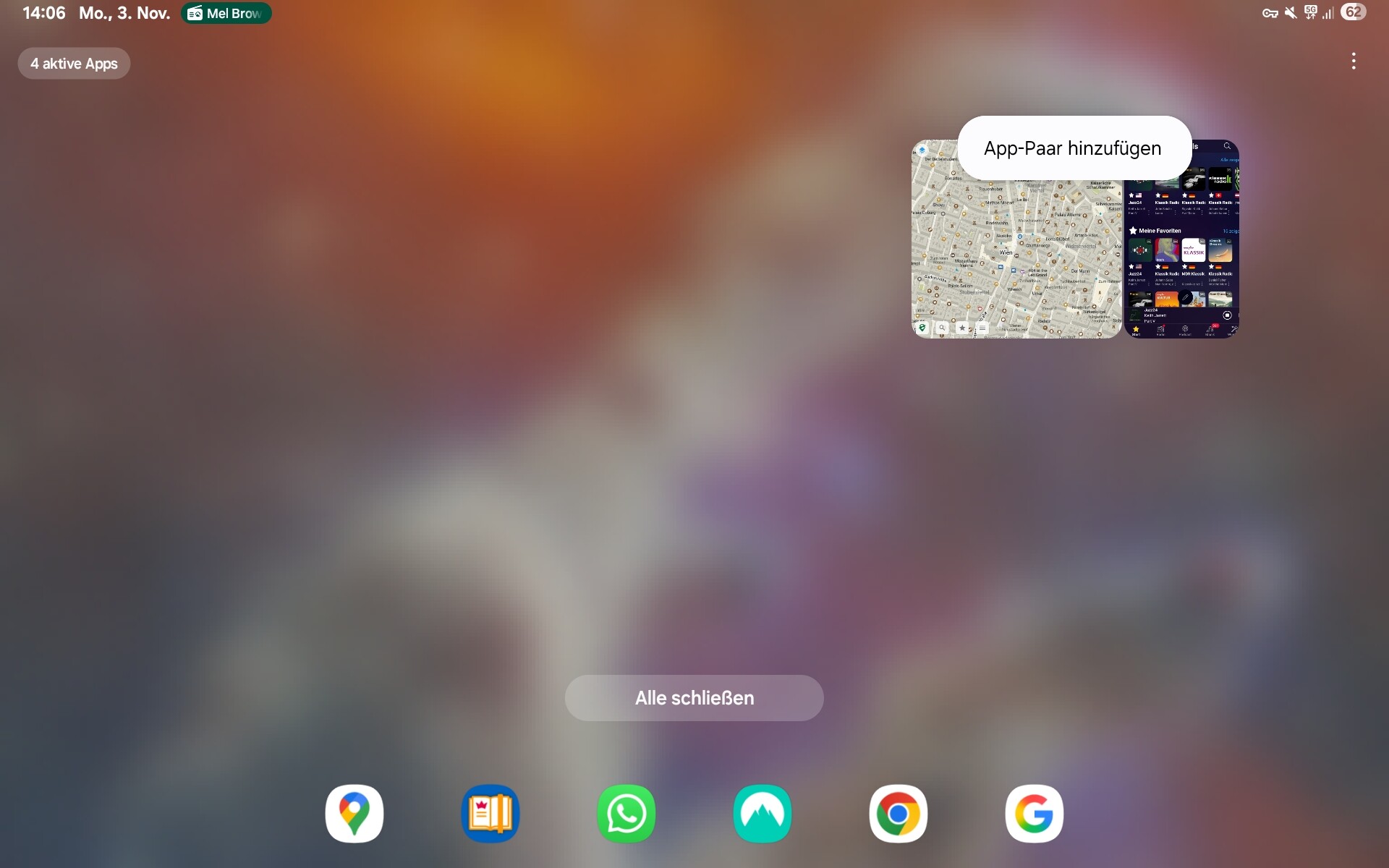
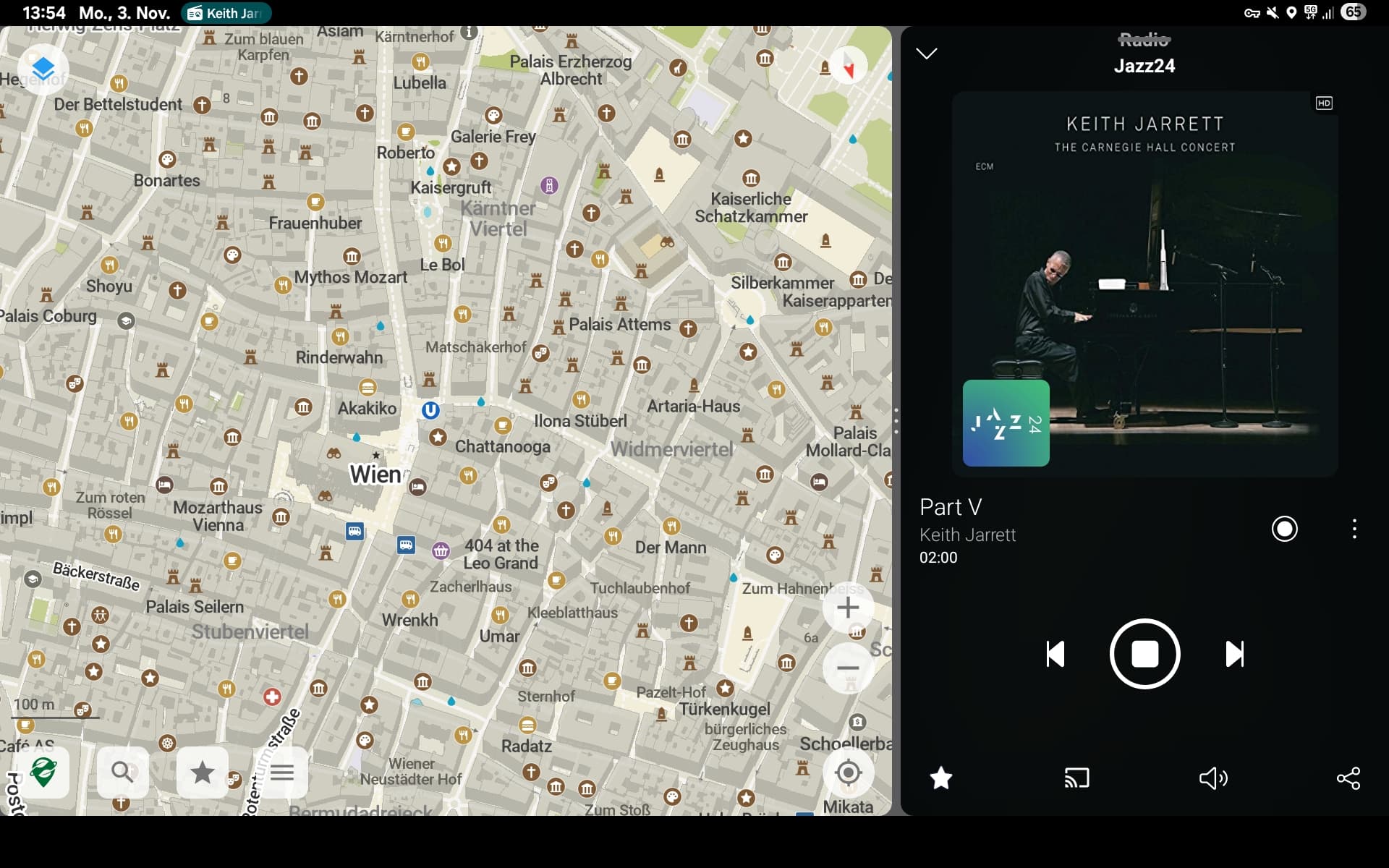
There should be an option to launch app pairs via a single shortcut (e.g., navigation + internet radio in split screen when getting into the car).
Conclusion:
For my requirements—hotspot reliability, energy efficiency, multifunctionality, large battery capacity, and stylus support—there is currently no real alternative to Android tablets based on ARM architecture. Other systems are not yet competitive, either technically or practically.
Been using a Pixel Tablet with GrapheneOS. I love it. Checking news, mail and streaming. Its my most used device. It’s so nice laying down and relaxing in the evening. Wouldn’t by a new tablet until this is End-of-Life. I don’t like that it isn’t that repairable or that it lacks an SD-card.
A would consider a Fairphone tablet if there an serious alternative OS to install, such as GrapheneOS och maybe LineageOS.
Edit: The dock for the pixel is very nice to have, an great concept. But an snap on keyboard such as the Microsoft Surface Go has, is something that I would very much appreciate for an tablet.
But when you think about it, why buy a whole tablet when you could connect a large touchscreen to your trusty old Fairphone 5 (not the FP6 with its USB 2.0)? So why buy a whole new digital system when a screen will do the job ?
I therefore vote for ‘Fairphone’ to produce this standalone screen.